Comparison: 9 of Swords

one in a series exploring the intersection of meanings between the Waite-Smith and pip / TdM decks
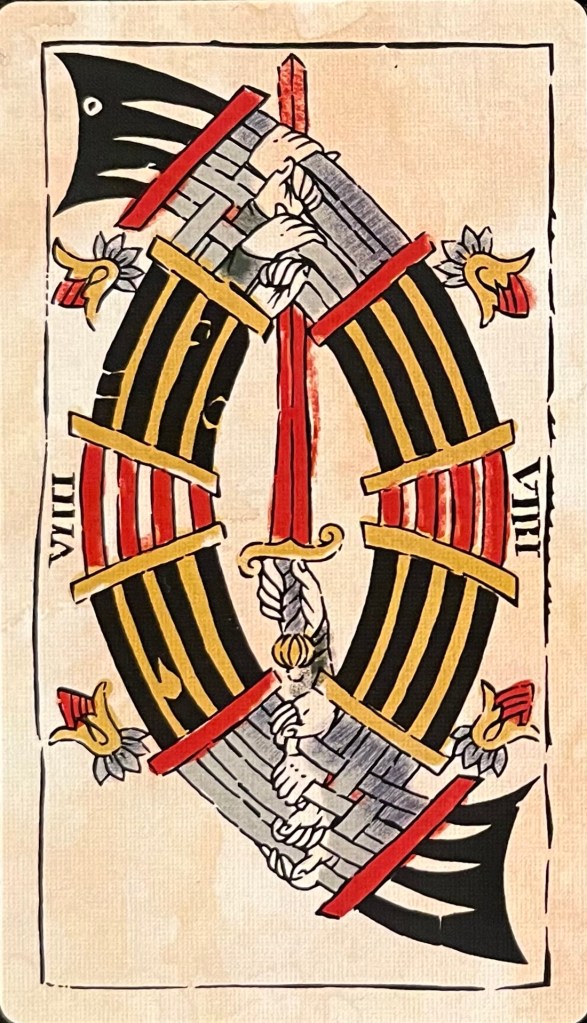
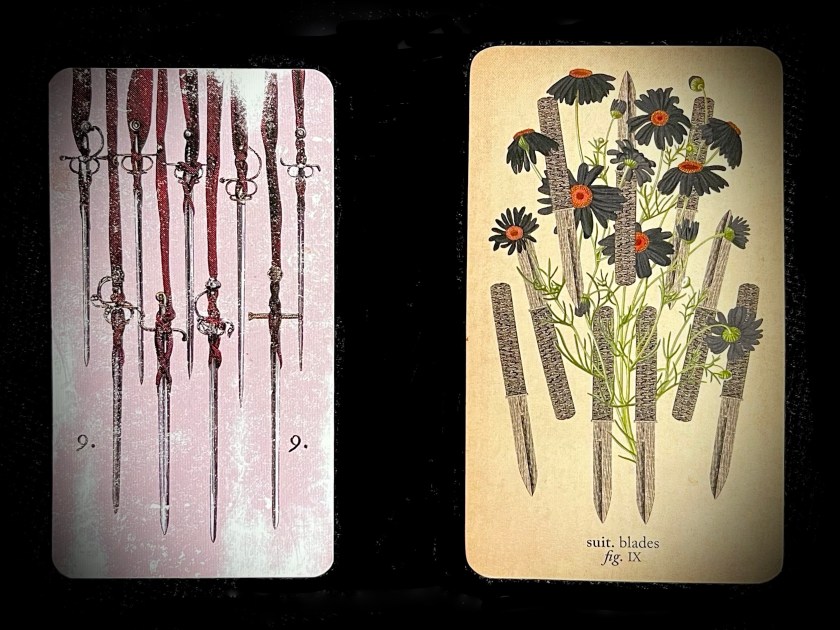
In the Pips, a single sword pushes its way up and out through the barrier of 8 interwoven swords.  It’s a card of victory, but by pushing through; by having the courage to push through them.
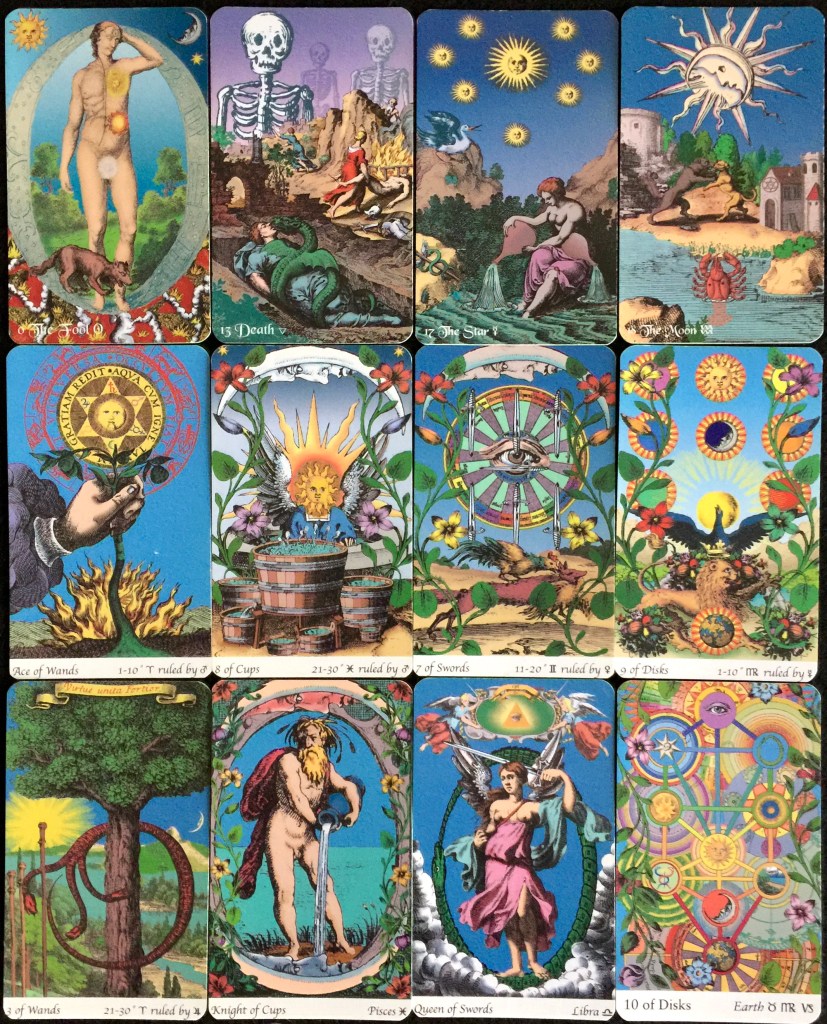
(Deck shown at left is Tarot des Ambiguities by Alejandro Rozan and published by Artisan Tarot.)
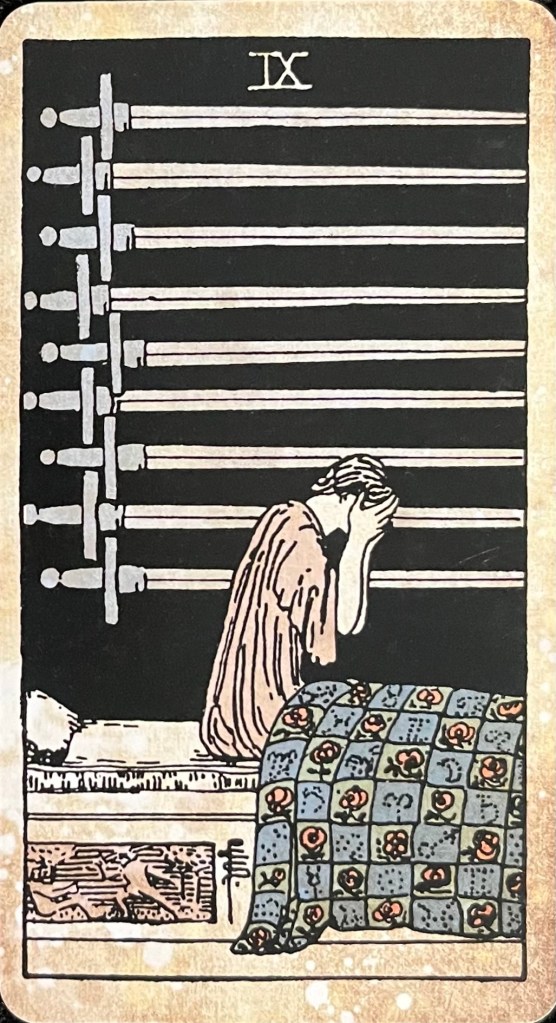
Waite, on the other hand, called it a card of utter desolation, “she is as one who knows no sorrow which is like unto hers.” Death, failure, miscarriage, delay, deception, disappointment, despair.

Pamela Coleman Smith was probably pulling from Romeo & Juliet for her depiction; the carved scene perhaps a nod to Act IV scene III, where a distraught Juliet sees the struggle which ends with Romeo killed “upon a rapier’s point.”

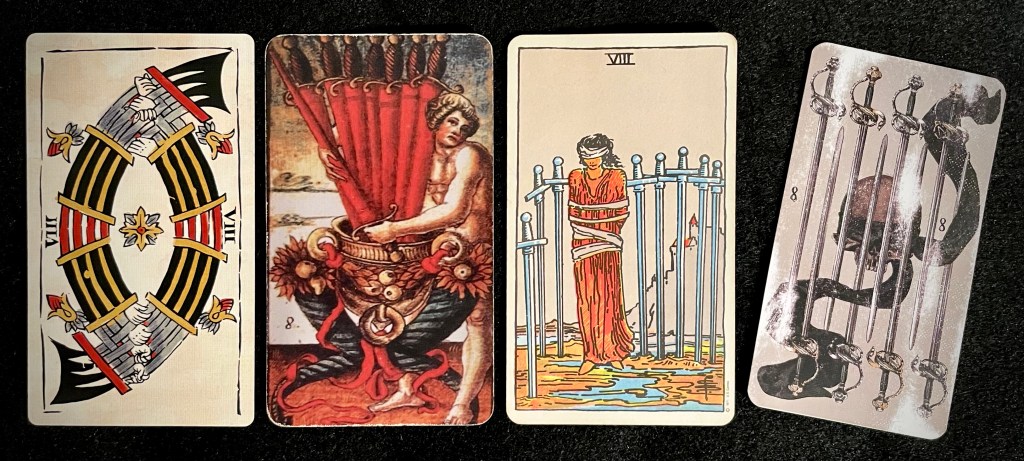
Deck shown above is Tarot Vintage, published by Llewellyn.

In modern decks, it seems to be a card about our worst fears and the ways in which they play (and replay!) on our mind. We listen to these tapes in our heads replaying our anxieties over and over, and we believe them. I have long thought of this card as being about our fears causing us to imagine the worst in spite of reality. Don’t believe everything you think — which could have been advice for Romeo (thinking that Juliet was dead when she really wasn’t), which caused both of their deaths.
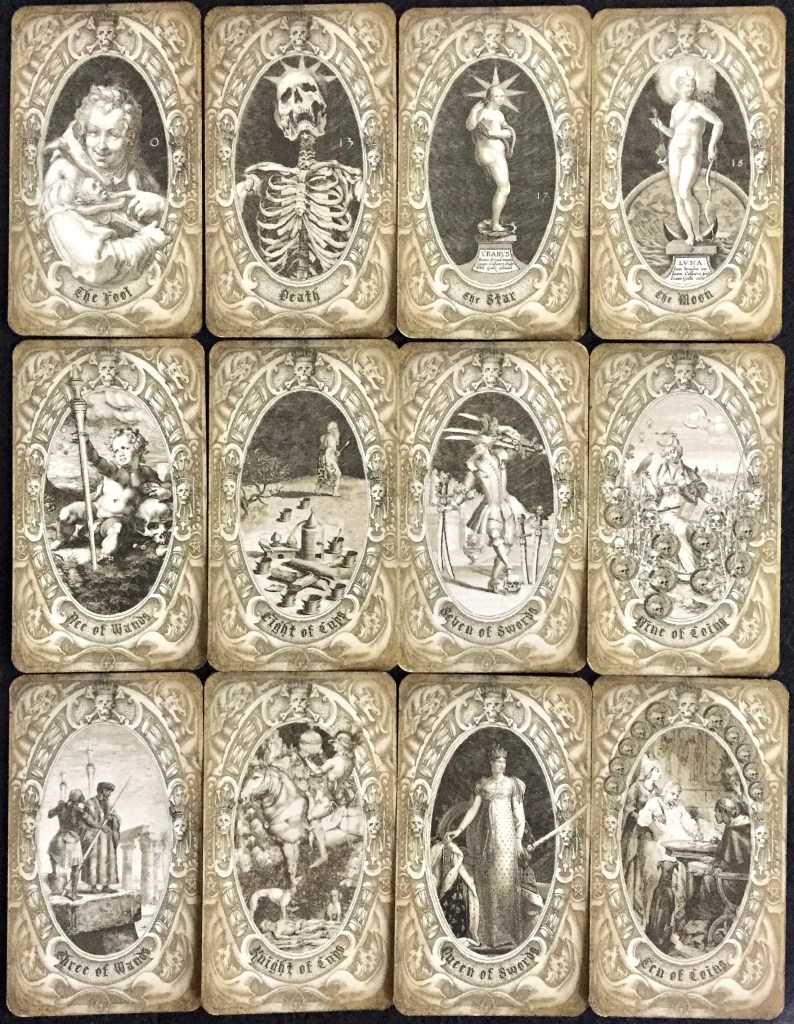
So when I look at a modern pip deck like Tarocchi by Mr Friborg (left) or Antique Anatomy (right) — which are both a modern combo of these systems — how can I approach the pip cards? I go back to the basics of number + suit.

To me, the number nine (in its strive for completion here near the end of the cycle) reconciles + Swords deals with mental processing and our beliefs, so my base meaning is reconciling our beliefs. How do we reconcile them? By having the courage to face them or to question them. That’s how we blast through them.

So, I think these cards intersect at courage. Courage can only exist where there is fear (the shadow of this card). Fears are misguided beliefs (swords). I think the message of this card is that if we can muster the courage to face the truth of our fears, we’ll see that we’ve imagined them. Robert Place notes that The swords above her point to the future. Facing our fears is easier said than done, but as Lindsay Mack said, [paraphrasing] turn on the light, look under the bed, open the closet door, and see that there are no monsters there.

If only Romeo had done that.
At the Intersection of Waite Smith and Pips

As a lover of classic Italian and other pip decks and having learned to read on Waite-Smith decks, I’m a sucker for decks that mash them together. The Tarocchi by Mr. Friborg is a merger of the two systems and has turned out to be my most reached-for deck, these days. I like how the classical artwork is a morphing of historic decks like Soprafino and Sola Busca while also incorporating little nods to Pamela Coleman Smith’s handiwork, in the pips.

The thing is, I read the systems differently. Pip decks like classic Italian and French Besançon and Tarot de Marseille utilize visual cues, leading the eye to note patterns and directions, interpreting colors, that sort of thing; whereas the Waite-Smith deck was born out of the teachings of the Order of the Golden Dawn, so astrological and other esoteric meanings are imbued in the scenes on the cards (though I like to use them more naturally and introspectively). Add Sola Busca and its enigma of ancient Roman and Greek figures parading through the cards in scenic sequences that may relate to alchemy or the dark arts or whatever, and you have at least three very distinct systems.

So, reading my Tarocchi by Mr Friborg, my logical brain wants to find a common denominator between these systems for each of the number cards or minor arcana. Some are easy, because they have the same meaning (e.g., the 2 of Cups is a partnership or coming together in some sort of relationship across all of them); some have a common theme if you dig a little; and some just stay in their own lane.

To do this, I’m going to the sources of each as best I can. For pip and TdM-style decks, I’m taking a lot from Yoav Ben-Dov’s The Open Reading (retitled The Marseille Tarot Revealed), and of course the little white book or pamphlet that came with each deck, where available.

For Waite-Smith, A. E. Waite’s The Pictorial Key to the Tarot is the guide for the meanings of his deck in his own words. (I’m not going into the more esoteric details like planetary placements and decans of signs.) For the illustrations, I consulted Robert Place’s The Tarot, Magic, Alchemy, Hermeticism, and Neoplatonism, 2nd Ed, as well as Secrets of the Waite-Smith Tarot by Marcus Katz and Tali Goodwin. Knowing that PCS was also inspired by the Sola Busca and by Shakespeare, they’re referenced where appropriate.

There are no key sources for Sola Busca that I know of, or that are available, aside from Peter Mark Adams’s The Game of Saturn, which is a treatise on the deck as symbolic of the dark occult arts, but has been rejected by some (despite it being very well-researched). James Raven did a series of facebook posts dissecting each card, which I found very informative, and will likely be sprinkling in some tidbits inspired by that.

But this is my new project, and I’m really looking forward to finding new layers of meaning in the cards as I try to find that point of intersection for each one. I hope you do, too — and invite you to share your insights!

Decks

For those interested in a reading, I like to offer a snapshot of available decks for those who would like to choose; and for other readers who just like to look at various decks, I am including a quick little blurb about each.

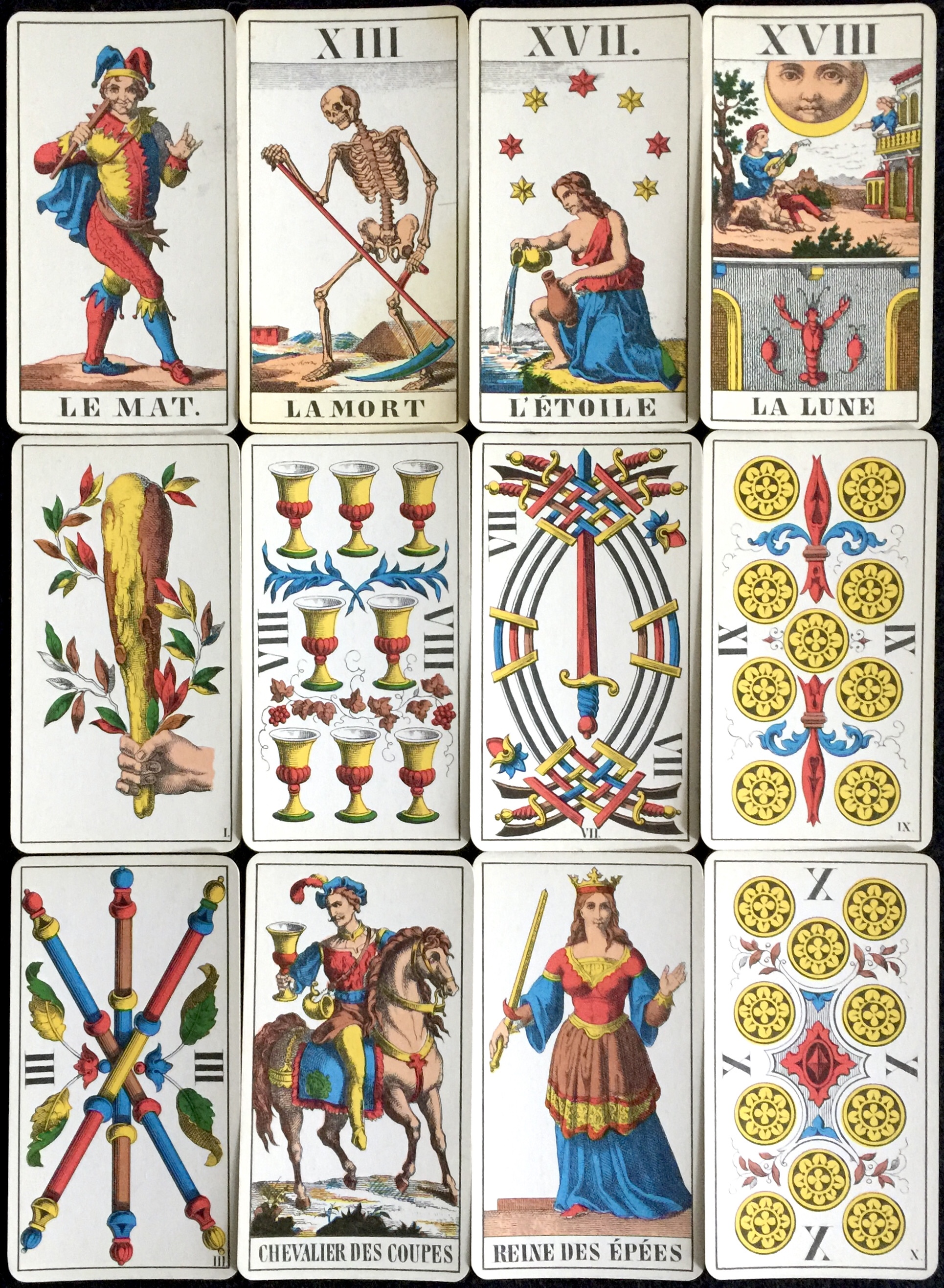
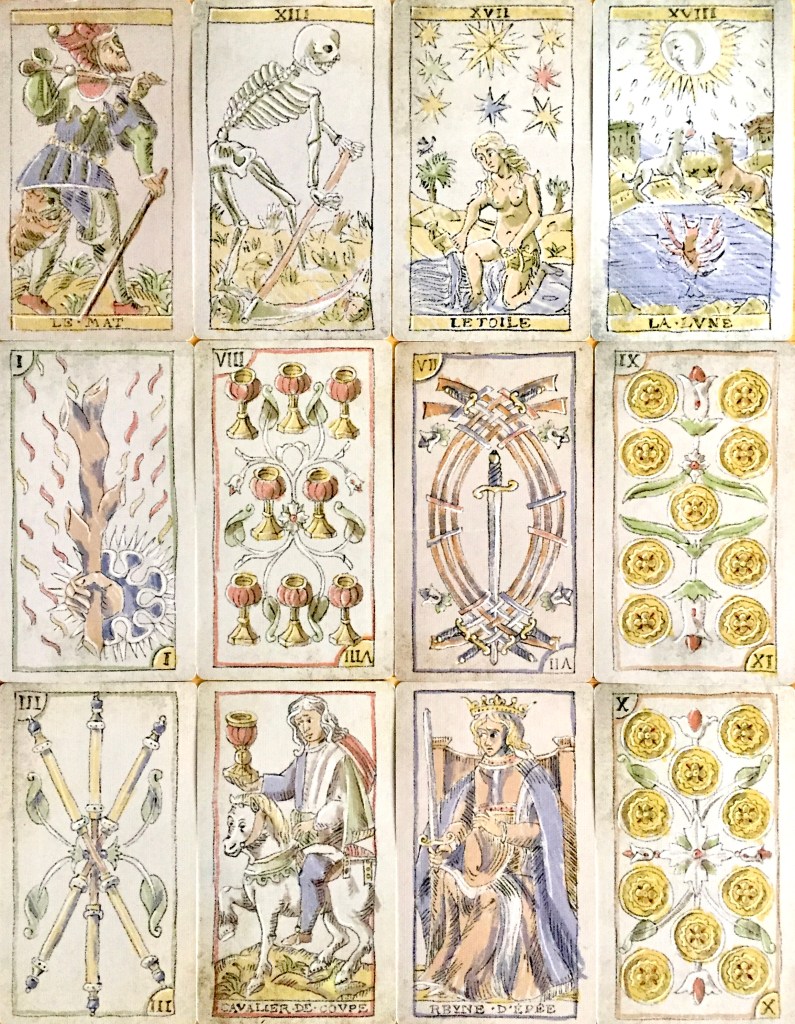
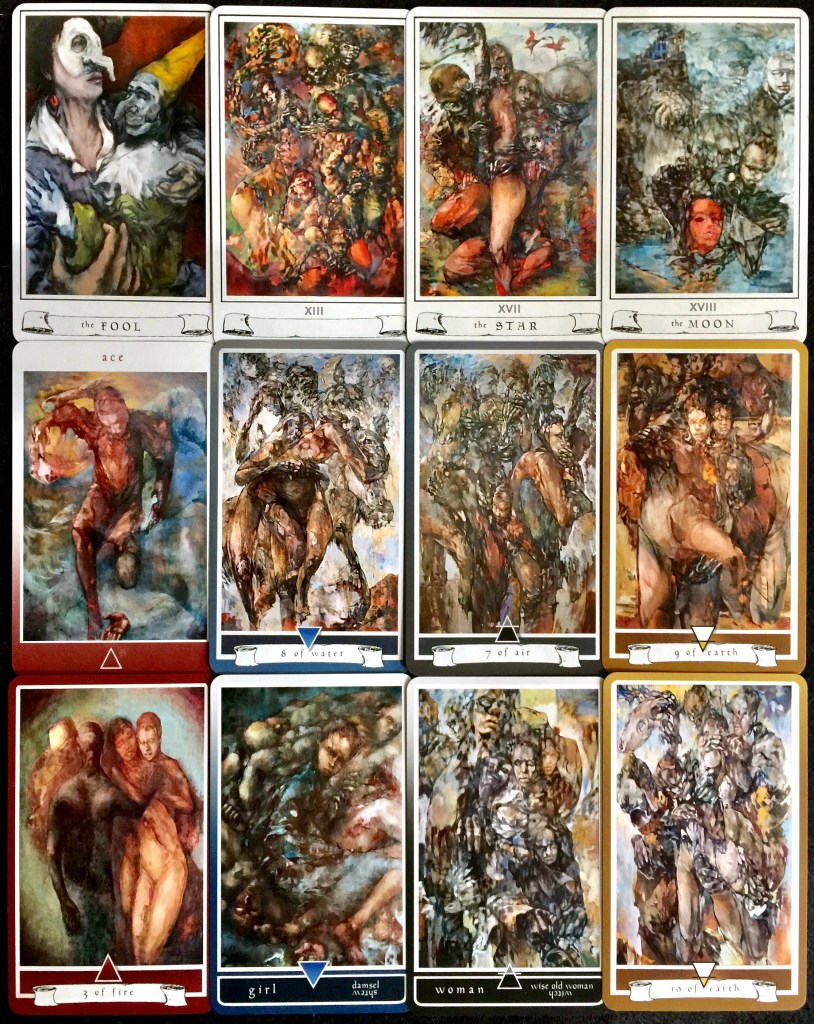
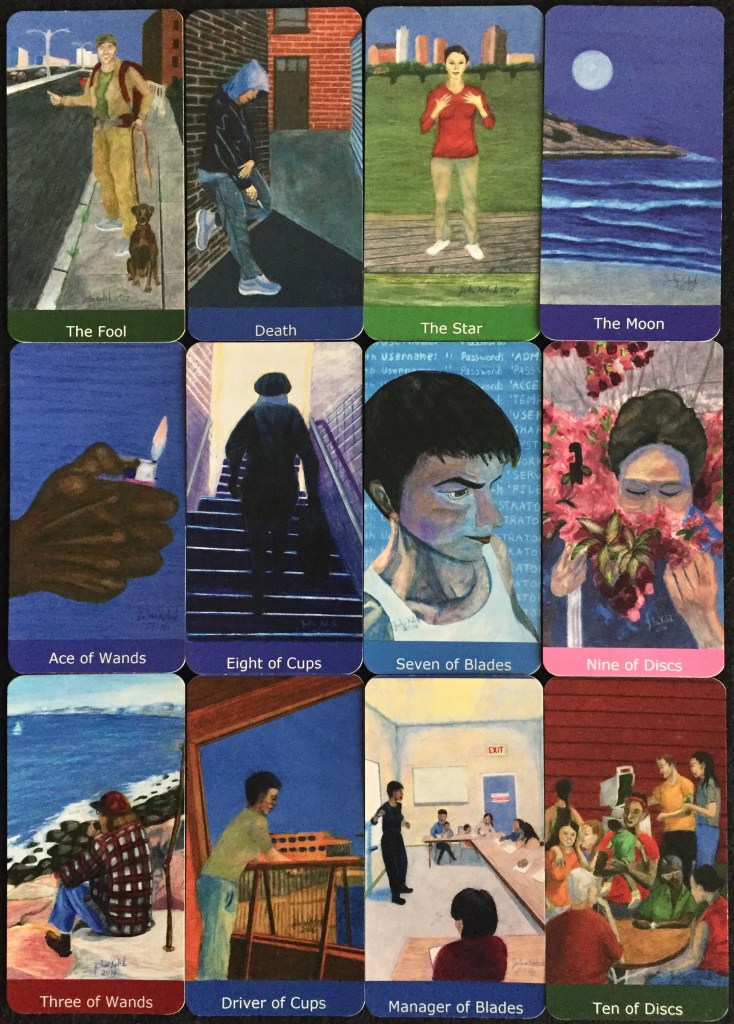
Listed in no particular order, they display the same cards for consistency in comparison.

Deck of the Bastard
by Tarot by Seven

Called Deck of the Bastard for its bastardization of different decks, it combines Rider Waite Smith (RWS) for minors, Etteilla for majors, and classic Italian Aces (see Tarocco Soprafino, below). It’s like the perfect Frankenstein of tarot decks.

This is the deck I use most for others, as its imagery is more easily identifiable (and I just like shuffling the supple, linen-finished cards). I also have a bridge-sized edition of this deck that is always in my bag.

Infernal Tarot 
by Erik Pollitt
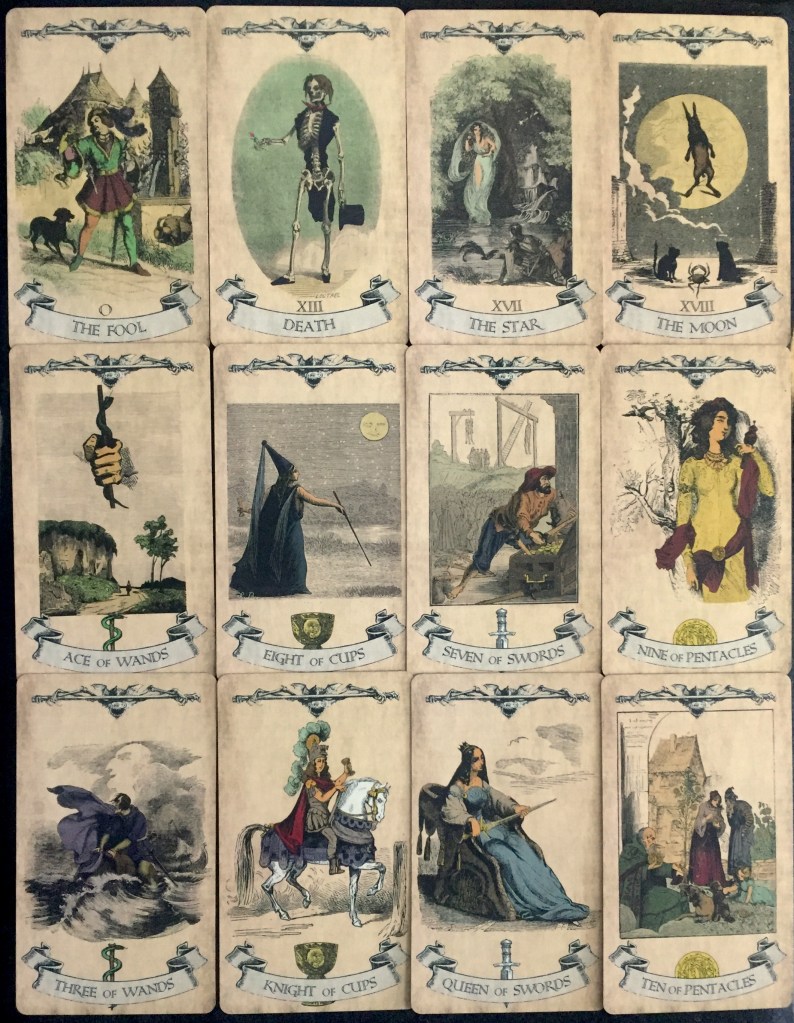
I was drawn to the antiquated style of this deck, which was created from illustrations in the Dictionnaire Infernal; it gives me the nostalgic feel of the dusty old books I used to rummage through in the basement of my childhood home. Based on RWS, the imagery is pretty straightforward, but I have found it to be somewhat more cerebral in its tendency to make me think differently when interpreting their meanings.

It’s a very versatile deck that presents well, visually, in readings.

Dreamkeepers Tarot
by Liz Huston
(now published by U.S. Games)

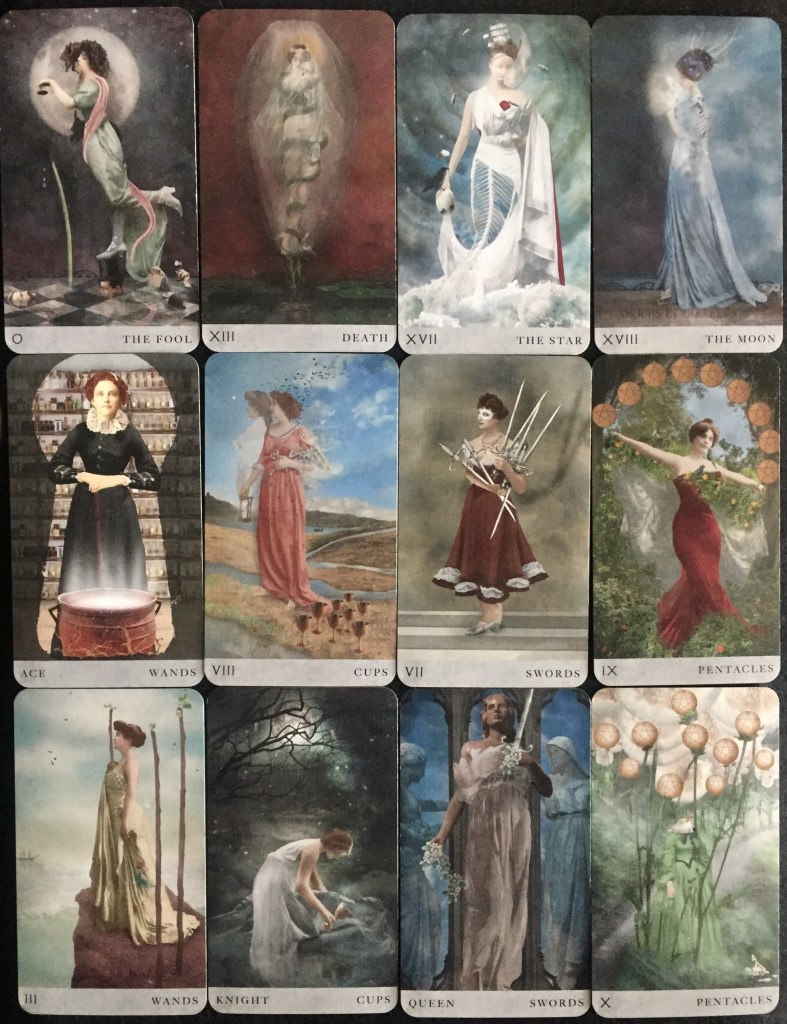
Although I loved the dreamy Victorian feel of this deck, I’m not generally a fan of collage effects in tarot and resisted buying it for many months. Once I did, its watery nature clicked immediately for me and I fell in love. The same thing happened with the book – I disregarded it as a little too traditional for me at first, but soon realized that there are pearls of wisdom contained in the ways that she articulates the meanings.

It has become my main journaling deck. I can ask it a deeply introspective question and it really hits the mark.

Murder of Crows
Lo Scarabeo (distributed by Llewellyn)

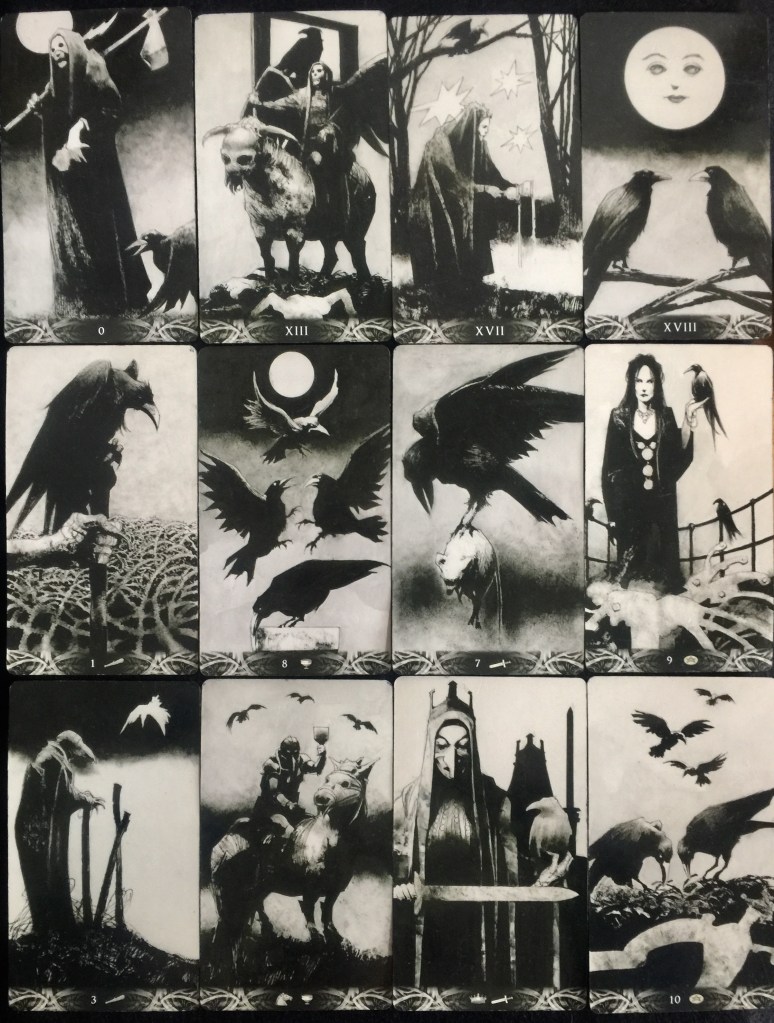
My shadowy inclinations squealed with glee when I saw this shiny new thing, and ordered it directly from the publisher before it was even released. Gorgeously illustrated by Corrado Roi, it speaks directly and effortlessly to our shadowy parts.

This is a great deck for those who like a darker aesthetic in their spreads, but the heavily laminated card stock makes the deck a little thicker, and thus harder for my small hands to shuffle. But I still love it.

The Relative Tarot
By Carrie Parris

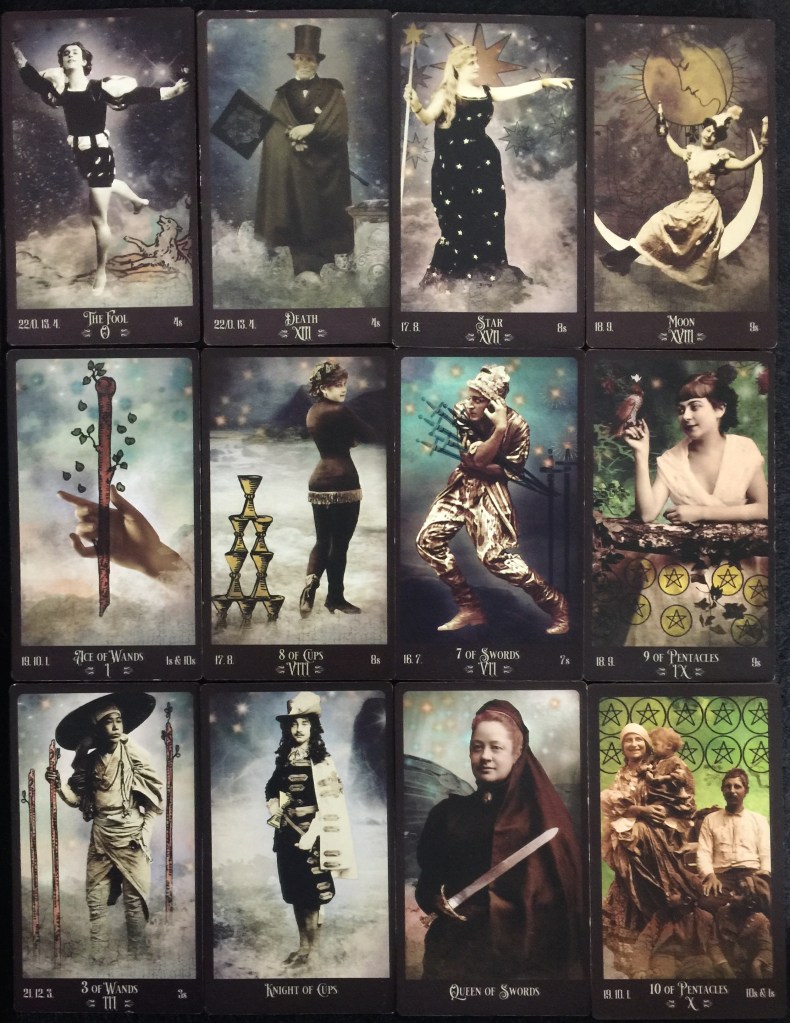
Designed specifically for working with our ancestors, it was created from a myriad of old tintype photos that followers submitted of their own relatives, with symbols from the Waite-Smith card overlaid into the image. The border of each card contains its numerological / birth card constellation along with the name and number.

It came with an 80-card companion oracle in the same format, and – though not apparent in these dozen cards – both decks are culturally inclusive of regions around the world.

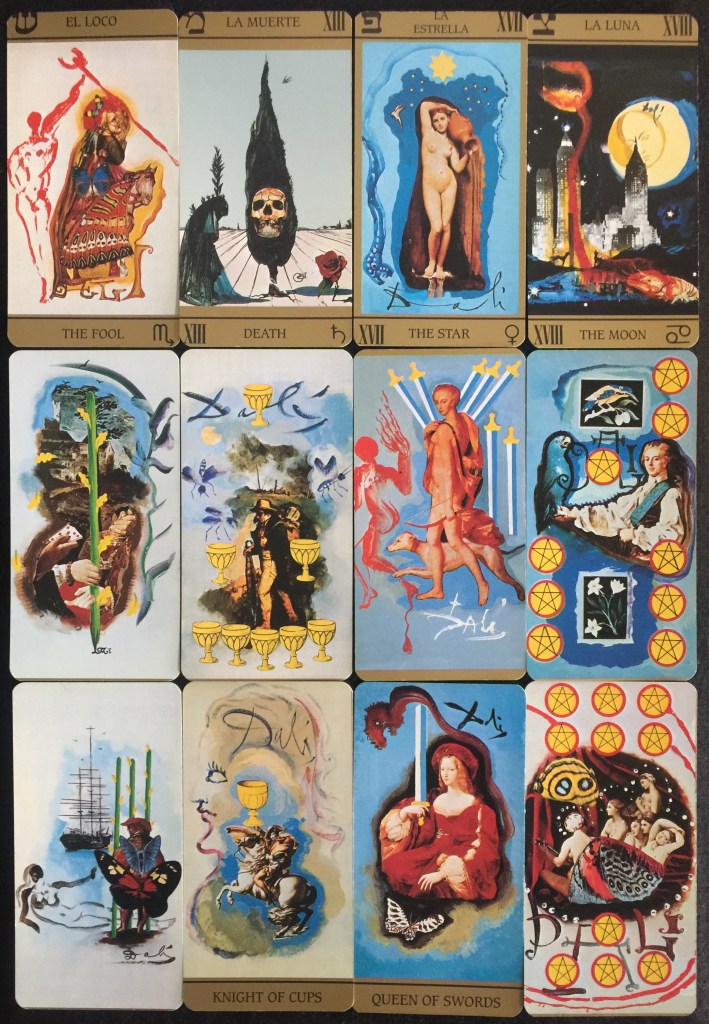
Salvador Dali Tarot (trimmed)
Taschen Publishing

Dali was commissioned to produce this deck in the 70s for one of the Bond films. Although the contract fell through due to disagreements with the director, he still completed the deck.

With its surrealist style and random swirly brush strokes, the highly creative artwork lends itself to a more intuitive reading, and it remains one of the decks that is always out on my table.

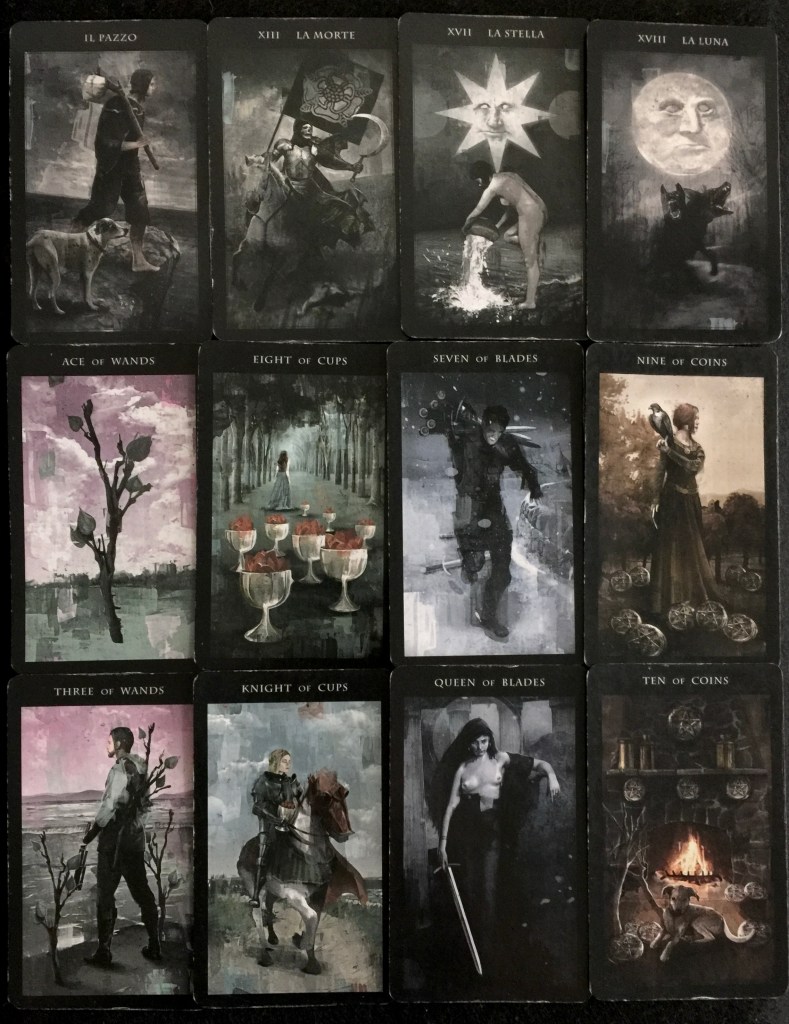
Darkness of Light Tarot
by Tony DiMauro

Don’t be fooled by the dark aesthetic of this deck; its mood is very sweet. This is one of those decks that feels like an old friend happy to share a blanket on the couch while sipping tea and sorting through life’s curve balls. The inclusion of his dog in several of the cards only adds to the comfortably loyal vibe.

Sometimes it’s obvious when deck creators aren’t readers, but in this deck it doesn’t really matter. He was true to RWS imagery without any new twists, and puts forth the scenes with beautiful painterly technique.

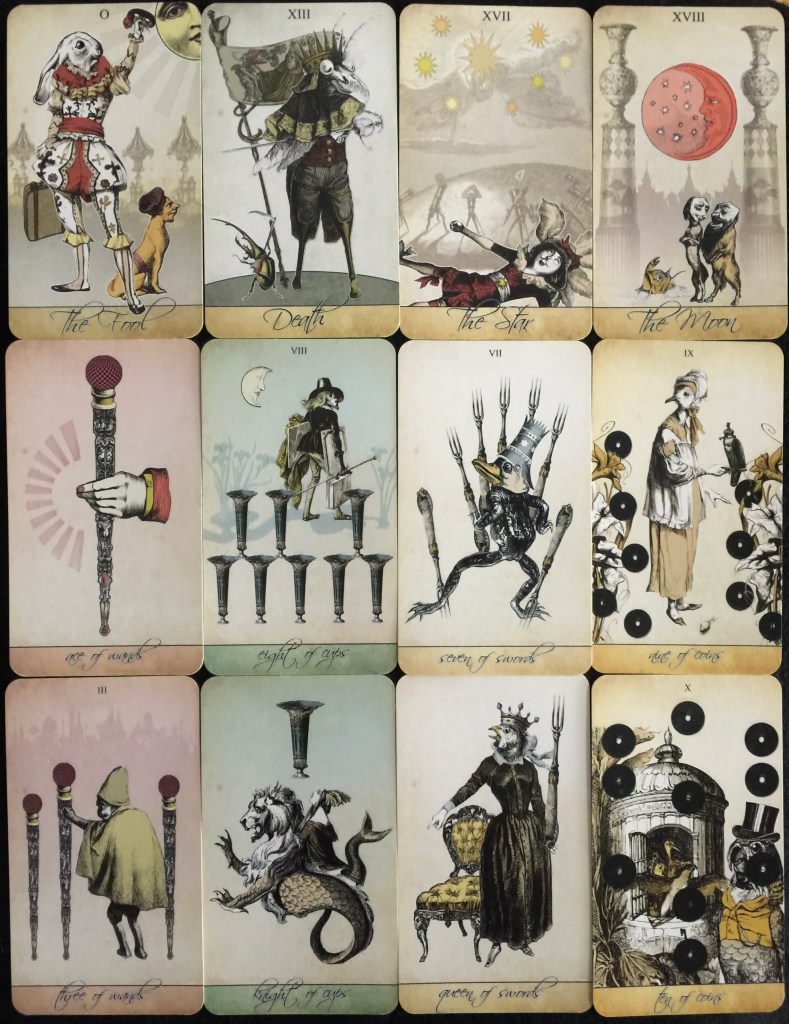
Isidore Tarot
by Bethalynne Bajema; via Attic Cartomancy

This deck reframes RWS in ink illustrations typical of the Victorian era. Its mood is light and fun, and since there are only animals (and the weird animal hybrids of that time period, like the frog with a duck head), pet lovers often like it. Though it carries a sense of whimsy, it can dole out the dark just as easily.

Bohemian Gothic Tarot
Baba Studios

The darker sister to Baba Studios’ Victorian Romantic Tarot, it presents as dark & gothic at first glance, but its campy humor lightens it up. This is a really fun deck — especially if you like old horror movies, cold stone towers, and creepy kids in graveyards. It’s got a nighttime vibe and is cloaked in cool blacks and blues. It reads well in general; not just for the shadows. Though used copies are selling for hundreds of dollars on eBay and elsewhere, I’ll never give up this gem.

Touchstone Tarot (trimmed)
by Kat Black (now published by U.S. Games)

This is the deck that started me on the trail of independent tarot decks, and I still love the seamless blending of various Renaissance and Baroque works into RWS themes. I did have to remove the chunky “frame” borders, which allows them to expand a bit in a spread.

The card stock of the original deck is like stiff cardboard; so this may be one indie deck that benefits from mass market production.

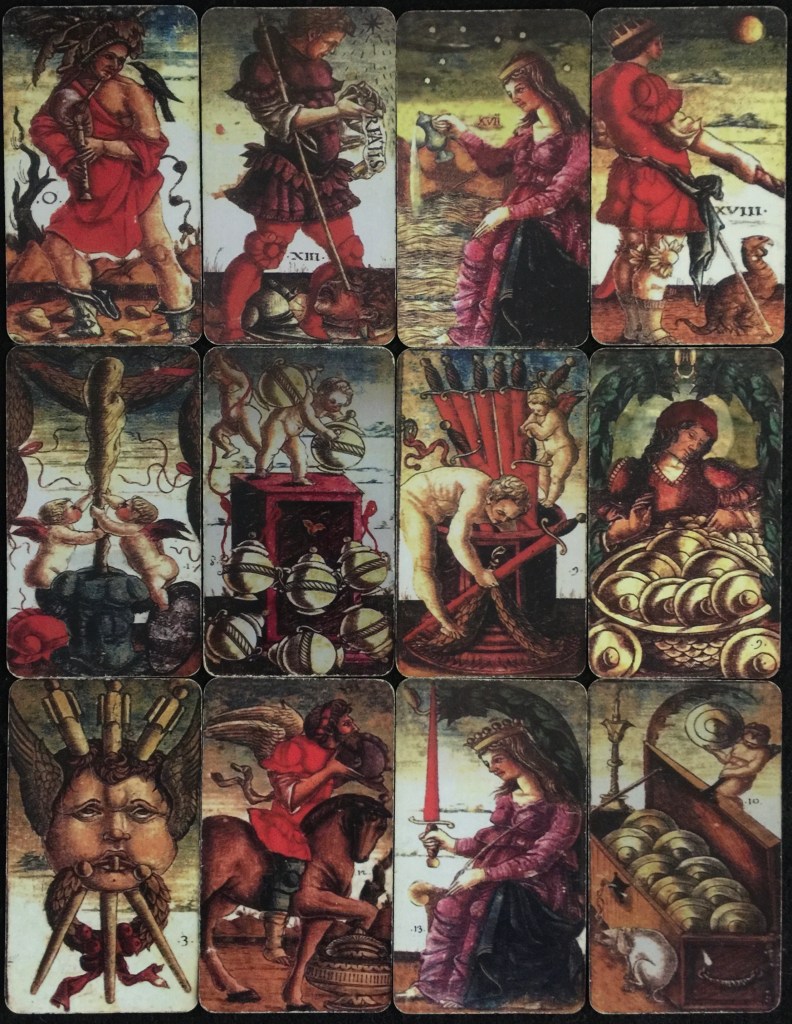
Sola Busca Revisited
by Tarot by Seven

Neither RWS nor Sola Busca, it’s sort of a mash-up of them into a hybrid. The original Sola Busca artwork lost its names, was given a redder color palette, and had several of its cards reconfigured, swapped out, or moved around to more easily fit a RWS scheme.

This is my favorite tarot deck for several reasons, but since it’s from a deck that portrays its own system of esoteric meanings around the process of alchemy (and/or is suffering from a bit of an identity crisis), it’s a little bit wonky to read.

Tarot of the Holy Light (trimmed)
by Christine Payne-Towler and Michael Dowers

Speaking of decks with their own unique esoteric formulas, Tarot of the Holy Light is a Continental deck with 17th century-styled artwork. Its correspondences differ from the other esoteric systems such as Golden Dawn and Thelema, so it has a voice of its own. I haven’t used this deck a lot, yet; but plan to. With the white borders gone, they intermingle really well in a spread.

Tarocco Soprafino
by il Meneghello

I love historic decks, and this beautiful reproduction of a historic Italian tarocco by il Meneghello retains the thick paper quality of the cards and square corners.

Because it’s a pip deck, it reads differently than the decks with scenic number cards, but is no less informative. In fact, the lack of scenic narrative can open up more intuitive reads.

1JJ Swiss
by U.S. Games (out of print)

This is my first deck, found in the basement of my childhood home. A Besançon tarot, derived from the Tarot de Marseille, it’s called 1JJ because it’s the first to replace the Popess and Hierophant with Junon and Jupiter . This deck (from the 1970s) is of superb quality in both card stock and printing. I wish U.S. Games still used this card stock!

Marseille Sophistiqué
by Three Point Comics

As much as I love more traditional decks, I just don’t like the crudeness of most Tarot de Marseille (TdM) artwork — nor the boldness of the colors. This is a TdM set in much softer tones with an antiquated stained look, and I love the sketchy, watercolor style of the artwork.

All tarots de Marseille are pip decks and as such are read differently than most of the more contemporary types, as mentioned above in the Soprafino description.

Gnostic Tarot
by Chris Leech / Welkin Tarot

Created more for personal use in shadow work, I’m including it because it is my most profound deck. Combining Gnosticism with a Jungian approach, it invites the reader into deep introspection and transformation by identifying how the various parts of our psyche may be (re)presented in each card.

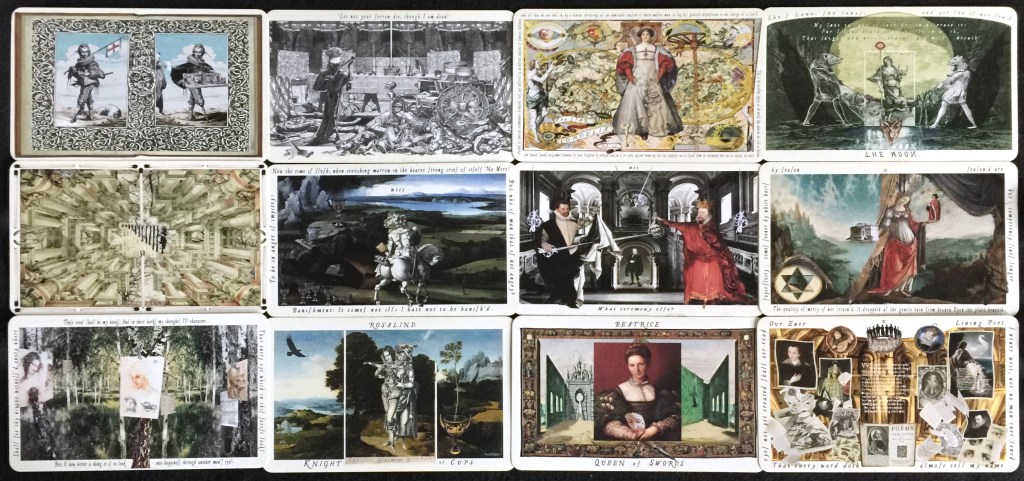
Shakespeare Tarot
by Chris Leech / Welkin Tarot

This is a great deck for the literary nerd, as each card’s meaning is presented as a scene from a work of Shakespeare using the complexities of the characters involved. The card orientation is landscape instead of the usual portrait, as a metaphor for the stage. We are all merely players, no?

Herbcrafters Tarot (trimmed)
by U.S. Games

I was drawn to this deck as an herbalist, and the artwork is beautifully presented, but I use it more for health and other well-being questions than my usual tarot inquiries.

(I did have most of the white borders trimmed, but in a new deck the plant names are included in the bottom border of each card.)

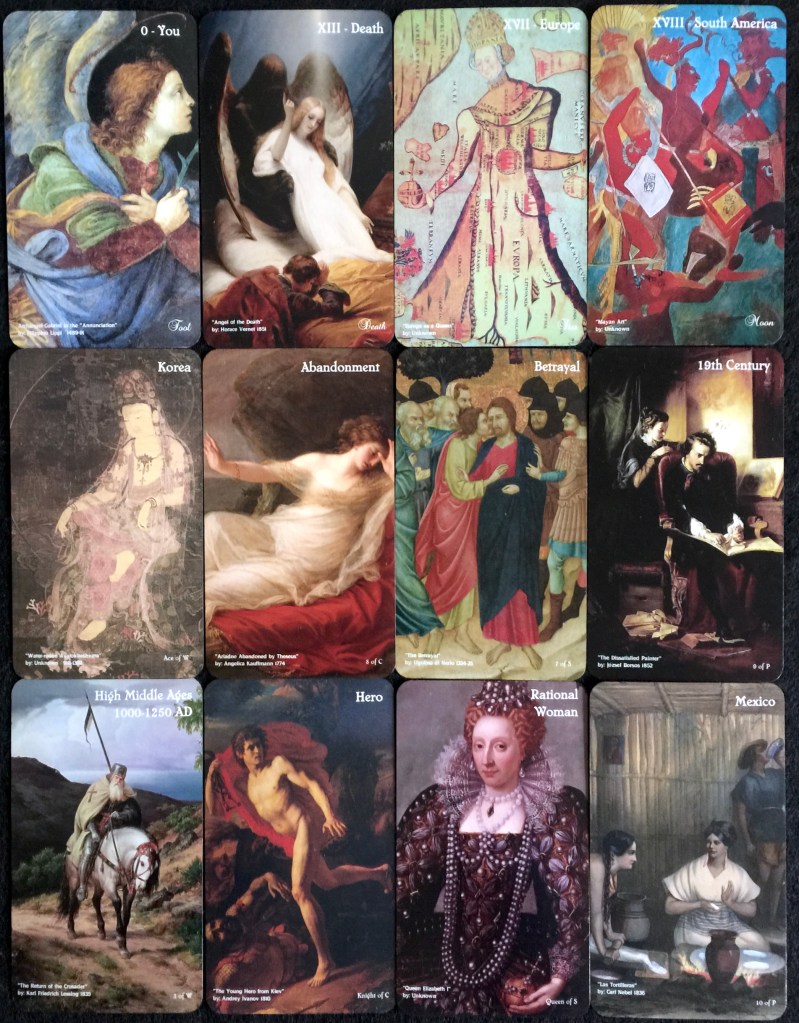
Art History Tarot for Past Lives
by Red Orchid Publishing

This deck includes some beautiful paintings from the Renaissance and other eras, though not necessarily reflected in the cards shown. Created for inquiries involving past lives, it includes keywords to indicate categories such as familial relations, parts of the world, causes of death, time periods, personas, and life circumstances. I love that each painting’s artist, title, and date appears on each card.

Arcana Full Tarot Playing Cards
by Dead on Paper

Combining playing card cartomancy with Tarot, this is a standard deck of playing cards (complete with Jokers) with beautifully illustrated trumps added in. The suits are presented as playing cards, but also include the tarot suit symbol, on the right.

I don’t use this deck a lot, yet, simply because playing cards are read differently than tarot cards, and I just can’t reconcile the different reading styles in this hybrid! I love the deck, though, and plan to use it more.

Paracelsus Dreams
by Dark Synevyr

Based on the writings of Paracelsus, most cards include a quote from his writings. The quotes and card meanings do not follow the RWS system but a more esoteric one more in keeping with his 15th century Hermetic approach to physiology and the natural world.

Personally, I love using this deck in conjunction with the Herbcrafter’s Tarot for health questions (though I don’t offer health readings for others).

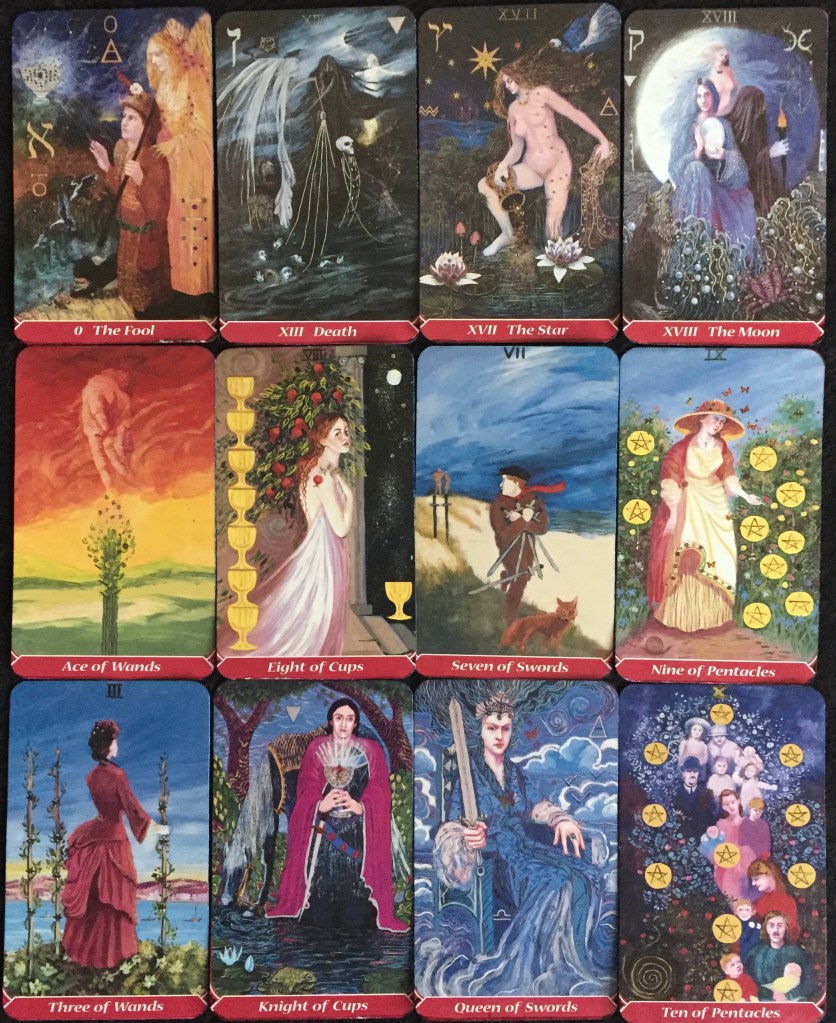
Spiral Tarot
by Kay Steventon (sold by U.S. Games)

This is a gentle deck with a slightly Victorian feel. I had to trim the purple borders (which I’ve seen others do, too — they really clashed with the cards), and it’s now a great little poker-sized deck that fits neatly into the palm of my hand. The paintings of the Major Arcana are some of my favorites (just look at that Moon card!).

Leonardo da Vinci Tarot
by Lo Scarabeo (out of print)

I love masterful art in a tarot deck, and these cards were beautifully created in the style of da Vinci, including the titles of the majors in backward handwriting. The meanings follow more of a TdM system and so the imagery differs from most of the other decks with scenic pips.

Medieval Scapini (trimmed)
by Luigi Scapini (sold by U.S. Games)

A hybrid deck that follows the more traditional Italian decks system but has scenic pips, it includes details reminiscent of a Visconti-Sforza deck. I trimmed its ornate borders and like how the off-white backgrounds allow the scenes to flow into one another. I also like that the trumps and the court cards have darker backgrounds and more visually differentiating in a spread.

Proletariat Tarot (trimmed)
by

I love the concept of a deck portrayed through the lens of the working class. The artist is also local to me, and I’m a bit of a fan of supporting local artists. I did have the borders chopped because they were just too colorful for me (and the colors were random, not organized by suit or other system (which I suppose is in keeping with a socialist approach!). It’s a modern deck depicting everyday scenarios, rather than a more erudite deck dealing with the esoteric or higher spiritual pursuits.

Deck of the Dead
by Tarot by Seven

Centered obviously around the theme of death, I usually use it more around Halloween — but the artwork is so good that it really shouldn’t be taken out seasonally as a novelty item. For us Scorpios, especially, this is a deck worthy of any reading at any time.

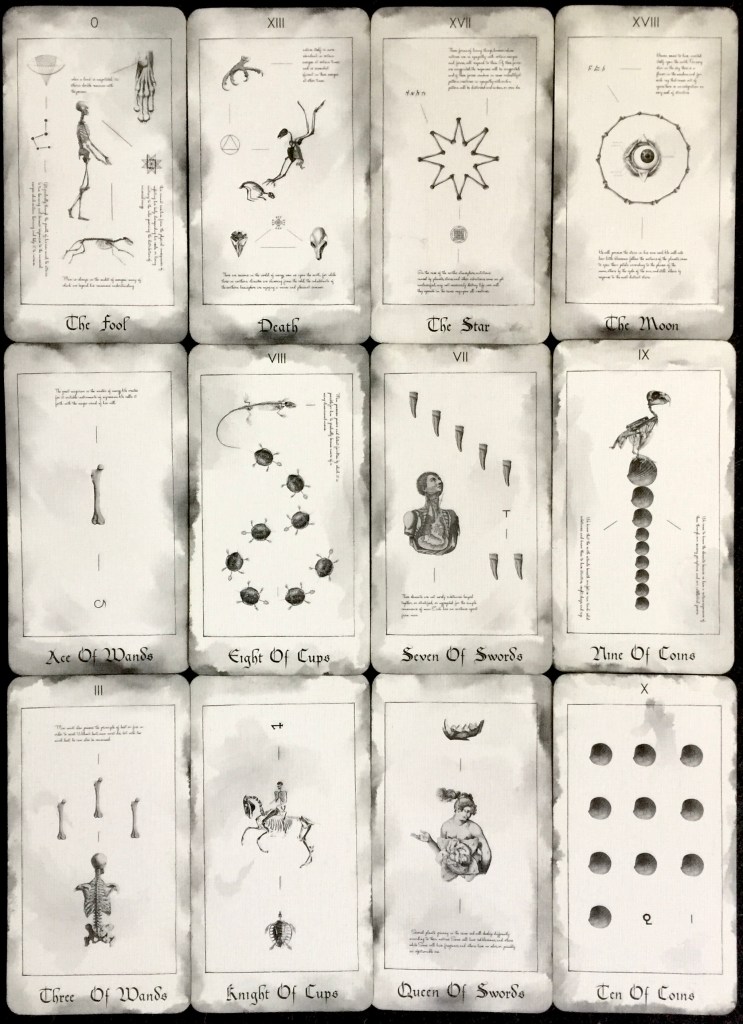
Antique Anatomy (1st Edition)
by Black and the Moon

Again with the skeletons, and again with the fabulous drawings. Later versions of the deck have colorful additions such as flowers, but this edition has only black anatomical illustrations (and some astronomical). No guidebook is available for this deck, and some of the imagery is puzzling, making it a very airy or heady deck.

This post is a work in progress!  The following decks are still to be added:

Golden Visconti-Sforza

Rackham Tarot

Hirajeta Tarot

Cary-Yale Visconti

New Orleans Voodoo Tarot

Rider Waite Smith